Showing posts with label money. Show all posts

Tuesday, July 30, 2019

Times of Extreme Frugality: Poor v. Poverty


I restarted blogging this summer after The Incident. 

Our only vehicle was totaled and replacing it, even with a low- priced, used vehicle, seriously ate into our savings. We instituted extreme frugality in an effort to replace those savings as soon as possible.

And I began posting about how poor we are, sometimes in laughter, sometimes seriously.

But are we really poor? Not by any reasonable standards.

We are on a fixed income and with careful budgeting, our income covers our expenses and usually can be stretched to build up some savings.

We own our own property, free and clear. We have a reliable car (again). We have no debts. We eat well, have health insurance, internet service, and a cat.


And even the federal government says for a family of two, we do not meet the poverty criteria.

Yes, our income is well below what most would consider is enough to get by in the United States today. But we have resources those in true poverty do not have. 

We both come from middle class families, we are college educated, we grew up with all of the advantages of being white, heterosexuals in safe neighborhoods in the boomer years when optimism for the future was not a pipe dream. 

In short, we were never marginalized or looked down on, we have had the opportunities denied many others. 

We have had many chances over the years to change our career paths and keep up with the Joneses.


But we have also had the luxury to develop our own lifestyle and our finances have mostly been by choice. 

We may well be considered poor compared to others, but we have never lived in poverty. 

I hope I can remember that and be grateful always.


Friday, July 26, 2019

Times of Extreme Frugality: The Tao of Ketchup


"Your money or your life!" 


This is not only the classic radio bit by Jack Benny, but also the title one of my favorite books about money:


While the investing advice is dated, the basic premise remains valid: time equals money. Is whatever you are contemplating spending money on, worth the part of your life you gave up to earn said money?

Or another way of looking at it, consider the tao of ketchup.

A bottle of Heinz ketchup will set you back less than $3 in the grocery store. In New York State, even at minimum wage, that is about 15 minutes of work.

My bottle of ketchup takes a bit longer.

Sometime in late winter, I set up my heat mat and grow lights, fill pots with seedling mix, and plant tomato seeds. 

If all goes well, they sprout and, over a couple of months, grow into healthy tomato seedlings.

In late spring, they get set out under a cold frame and, once the danger of frost has passed, are transplanted into the garden.


The summer brings weeding, watering, fertilizing, staking, and hoping the plants don't succumb to disease or insect attack.

If the garden gods smile upon us, sometime in August the tomatoes start to ripen.

Four quarts of tomatoes, some onions, and spices, cooked down and, voila!, ketchup. 

"Tower of ketchup" --get it?

Now, strictly from an economic point of view, I would be better off getting a job and buying the Heinz. But something in my soul, my tao, means I get very real satisfaction from growing and processing food from scratch and would rather spend hours growing tomatoes than 15 minutes working for someone else.

What is your tao of money? 

There is no one correct answer. Being frugal is a combination of being careful with time AND money and being mindful of what works best for you.


Sunday, July 21, 2019

Times of Extreme Frugality: Give When You Can

I am worldwide financier, a partner in four international and one domestic agricultural enterprises. 

I am also a certified tightwad and even in my giving, I look for the best way to stretch my money.

Two years ago, I discovered KIVA. I originally donated $50 and took advantage of a partial matching fund someone offered (I can't remember the details), so had $75 to lend. And that money is still being loaned over and over.


Jane is a grandmother and farmer in Kenya. She needed $300 to purchase new farming tools and equipment. Working through Kiva, 8 different folks loaned her the needed money. She repaid the loan within 18 months. I could now loan that same money, a whopping $25 from me,  to Mercy.


Mercy, also from Kenya, needed $200 to buy seeds and fertilizers. She runs her own farm business and has managed to send all of her children to school. She repaid the entire loan in 14 months. 

So now that $25 could go to Attractive from Zimbabwe.


Attractive is a teenage entrepeneur who runs her own chicken broiler business. A loan of $300 helped her buy feed and chicks. She contributed "social interest" by volunteering with a local group supporting women and, after just 14 months, repaid the loan today.

With that money, we were able to loan to Paddy from Uganda.


Paddy only needed another $25 to get his loan of $550 for fertilizer for his banana farm, the exact amount we just got repaid by Attractive. Kismet!


Kiva operates globally, including the United States. Our only domestic loan so far went to George.


George is a retired New York City firefighter who became ill due to exposure to the 9/11 site. He decided to change lifestyle to cope with his medical problems and requested a loan to upgrade his poultry houses. He is still repaying the loan. And I'd love to hug that duck.

A small amount donated when we had a bit of extra cash continues to help people two years later and reminds us that you don't have to be wealthy to make a difference.


Wednesday, July 10, 2019

Times of Extreme Frugality: Running Dry?

Scrimping is my default. 

Penny pinching is second nature.

It seems sometimes that I've tried just about every hint I've heard (clip the coupons, shop the sales!) and that new and realistic ways to stretch the ol' dinero are scarcer than hen's teeth. These two minor efforts from this week do fall outside of the normal tightwad suggestions; maybe they'll spark some different ideas for you.


1. The garden needed watering, I needed to do laundry and I remembered that we are now paying for water (last 3 houses had wells).

So:


Our washing machine is a portable that you hook up to the faucet and drain into the sink. These buckets are just a portion of the rinse water from one load. It was a lot of schlepping back and forth out to the garden, but I feel better for not just letting the PAID FOR water go down the drain.


2. And this:


Anyone who has talked to us recently, knows our big summer project involves digging drainage. HAND digging. We've got a long mound of dirt snaking along the back yard but some of it we have sifted (our "sifter" is a plastic grate we found in the garbage pile on our property), giving us screened topsoil. Soil for raised beds and pots that we don't have to buy.


Both of these are what I consider extreme frugality measures--they're time consuming and back breaking, not something we will do consistently. I'm all for saving money, however, sometimes the spirit is willing but the aged flesh is weak.


How about you? Any outside the coupon-box type of ideas for reigning in the spending? We all could use some inspiration from the hive-mind!

Sunday, July 7, 2019

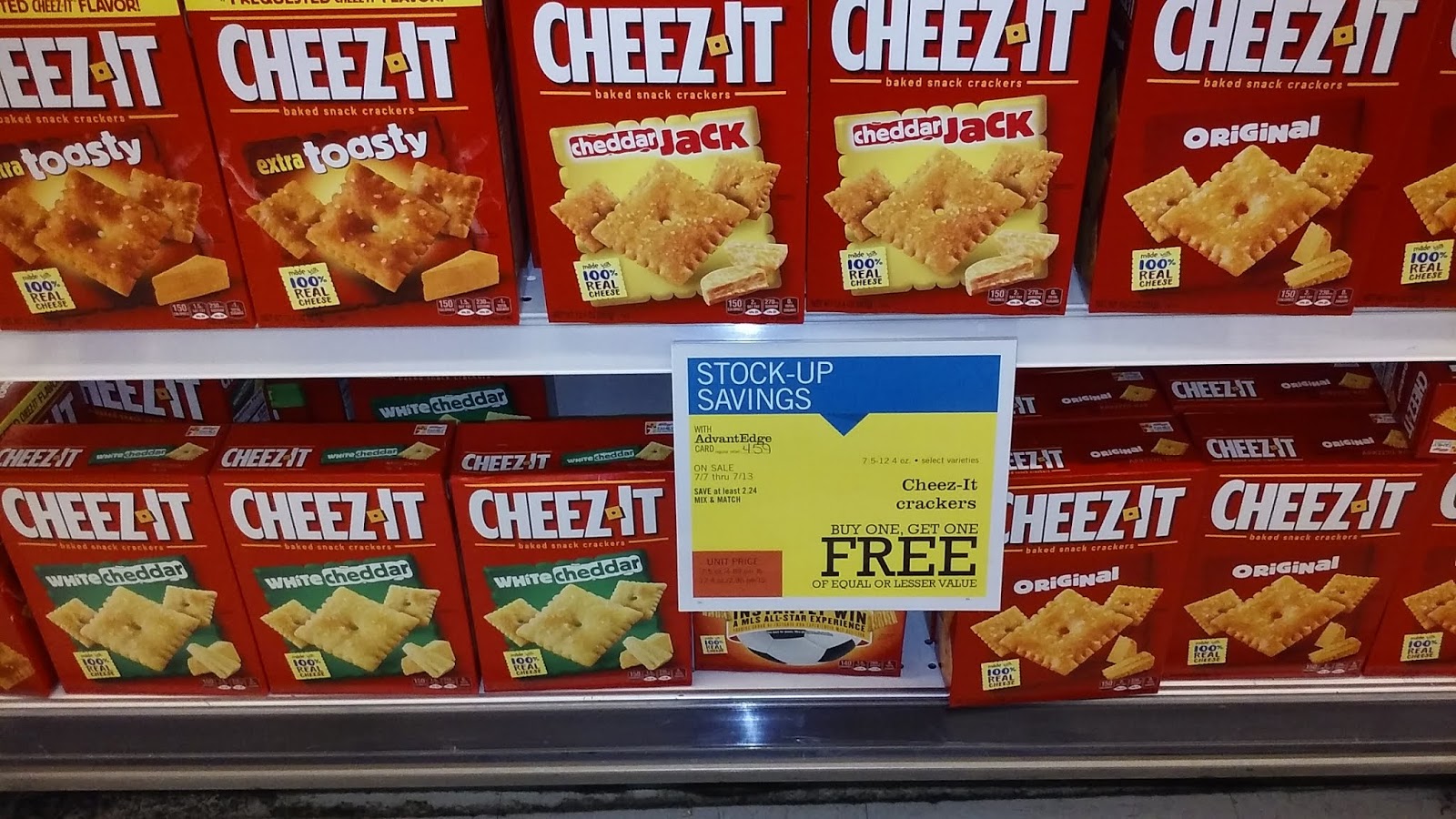
Times of Extreme Frugality: We Go Grocery Shopping

Extreme frugality can be succinctly expressed as:

       Don't buy stuff mindlessly.

Now, before you cry "DUH", bear with me for a bit.

We Americans are conditioned from an early age to buy, buy, buy. Buy our way out of depression, buy our way to a higher standard of living, buy because it's Christmas or Halloween or Martin Luther King Day. It becomes automatic and mindless.

Being frugal demands that you think before you plunk down that cash. Do I really need this? Can it wait? Will my world collapse if I don't purchase this or that?

The grocery store is as good a place as any to practice the zen of thriftiness. Follow me as I do my weekly shopping.

Caveat: Planning ahead means that my freezer and pantry are stocked. We probably could go without groceries for a month or two--meals would be interesting but we wouldn't starve. I hope you can say the same 'cause when the Zombie Apocolypse comes, I ain't sharing.

Anyway, on to the store!


On a typical trip, we ignore:

The Deli

The Bakery

and prepackaged cold cuts

Then we move on to not even bothering going down these aisles:


Sometimes, we do shop dairy (butter, cheese, but not milk), meat, produce, some canned and some paper goods. Coffee for Tom, and Diet Coke for us both (hey, we're human and we ALWAYS buy it on sale). 

Our ragtag little garden is starting to give us a bit of lettuce and tons of peas, so we skipped the produce section (except for some blueberries, on sale of course!). But at least 80% of the store is filled with items that we don't want or need. Lots of money saved right there!

Of course, even us misers are tempted:


But I am proud to say, I resisted these. If the desire is too strong, I can make my own.

Milk is one item we splurge on; NY dairy farmers need our support. 

When we can't make it out to Comley's Country Creamery we stop at Byrne Dairy--New York milk in glass bottles.


On today's trip, we also hit Aldis for cereal, orange juice, and sugar. Except for probably needing more milk later in the week, this should carry us through. Now, how many ways can I prepare peas?

How do you save on groceries? Any hints, tricks, or miracles you perform to keep the family fed?


Thursday, March 6, 2014

Sun in my eyes


Heavenly days, I'm using math again!

  I recently received an email announcing a one-day sale on solar panels. A 15w unit that normally goes for $124.99 could be had for $59.99.

I love the idea of solar power and southern Indiana gets abundant sunshine. In addition, I have $100* to spend as I please. I've been saving it for summer auctions but now considered whether this might be a good use for it.

I threw out the idea to Tom and just explaining out loud what I had in mind helped me to clarify what would be involved (and how it was more complicated than my initial impression).

A solar panel is a marvelous thing, but by itself it is just a lawn decoration; it takes a bit more to make it useful. Our house is set up for conventional, on-grid AC electricity. Therefore, the easiest use of a small solar panel for us would be to run appliances directly (I'm not going to get into DC appliances here). In order to do that, we would need a battery-type pack to hold the energy and convert it to AC. This same company offers a power pack, a 150w generator that can be charged by the sun. It costs $199.99. 

And to connect the two, add in a cable for $4.99.

So, at the very least and not considering shipping or sales tax, it would cost me $264.97 for a set-up that would power, at most, a laptop, lights, and/or a cell phone. And then only after a full day of sunshine.

Here's the wall I run into everytime I consider alternative power: our electricity use averages 317 kw per month at about $.09 per kw. So disregarding the basic service charges and all of those weird extra costs that power companies add in, our electricity costs us about $29 per month. Using solar to power a few lights or this laptop might save us at most $5.00 every month. Using that figure it would take 53 months or over 4 years for the solar to pay for itself. And that does not include the cost to build a stand for the panel and the hassle of remembering to bring in the power pack and consistantly use it.

I know there are other factors: yes, any use of solar would reduce dependence on coal and oil. Yes, it is good to have a back-up during power failures. But sad to say, in this case economics trumps all. And I could buy a LOT of candles for $264.97.

So the $100 stays in my wallet...but there's an auction this Saturday!


* I sold my mother-of-the-bride dress on Ebay. It was a lovely Edwardian-style tea dress, the most elegant and expensive piece of clothing I have ever owned but now, sadly, a full size too small.

Monday, March 3, 2014

Counting the Cost


If frugality were an Olympic event, I'd be on the winner's podium.

If being thrifty were a movie, there would be an Oscar on my shelf (or repurposed as a doorstop or glasses holder).

I would describe myself as careful with money, others might see it as cheap.

Whatever the modifier, a lot of what I do is motivated by the desire to save money. And that includes cooking from scratch.

Conventional wisdom dictates that ingredients plus effort plus time yields lower cash outlay than buying prepared foods. 

Like most of life, it's not that straightforward and keeping track of actual expenses is a good idea. I recently made some choke cherry and rosehip jelly and attempted to figure out the cost benefit over store bought, if any.


Ingredients: 

Fruit juice. Back at Woodchuck Acres, free fruit was everywhere. The road was lined with choke cherry bushes and we had a planting of rosehip-heavy Rugosa roses. The harvest was so plentiful in 2010 that I had more than enough for several batches of jelly and canned a pint each of juice for future use. So for this jelly, the raw materials were free using my time (more about that in a bit) and some energy for heat and washing (more about that later also).

Pectin. One box purchased for $1.00

Sugar. 5 1/2 cups or about 38 1/2 ounces which is a little more than half of a bag (4 lbs.). I can't remember how much I paid for the bag, I think about $2.50, so let's call the price of the sugar $1.50.


Equipment, energy, time:

The jars and rings I have had for many years and reused some Tattler lids. I suppose I should figure depreciation on this stuff but I had enough of depreciation doing taxes, thank you very much.


Energy. Everything was washed in hot water, the lids were boiled and the jelly heated and I processed the final product in a hot water bath for 10 minutes. My attempt to figure out the cost here involved how many BTUs it takes to boil a gallon of water but I got lost somewhere between converting joules to BTUs (or was it the other way around?) and then the caloric properties of propane, etc. My final guess is I used less than 1/2 gallon of propane. Our propane cost us $1.99/gallon, so that totals another $1.00

My time. I'm retired so my time isn't worth anything to anyone except myself. I enjoy making jelly and think this is a good way to spend some of my life energy, so add in $0.00.

Total. The two pints of juice yielded eight half pint jars of jelly. The total outlay is $3.50 or $.44 per jar.

So in this case, homemade is cheaper. 

Cooking is easy to tally but other typical country endeavors are harder to list in terms of profit or loss.

Growing your own fruit and vegetables? Building sheds or fences? Livestock? 

Take chickens for example: Feed plus chicks plus building a coop plus fencing (a run if you cage them, your garden if you free-range). Is it worth it for the eggs and manure? How much is the joy of watching their goofy antics worth or the time you spent defrosting water pans in freezing temperatures or the heartbreak when they disappear to predators?

 Many times people say they want to move to the country and live a simple life, be self-sufficient and live cheaply--a wonderful ideal but please come to it with a healthy dose of realism. Not all do-it-yourself programs will save you money but you'll become rich in the things that matter. And that's real wealth.


Monday, July 8, 2013

Why is a raven like a writing desk?


If you know the answer to that Lewis Carroll classic, let us all know. In the meantime, here's one that's a bit easier:


Q. Why is a small farmer like an independent musician?

A. Both work their tails off full-time for part-time income.


Nowadays, selling music is almost solely the province of the internet. Where once you might sign with a record company and hope to sell vinyl, you now write, record, produce, upload, and promote your own material online. And the rewards are...well, here's an example:

Spotify just posted, over 7 different reports for streaming of  28 separate original Tom Rasely recordings, a grand total of 10 cents in income.

Yes, that's right. A dime, one tenth of a buck.

Ah music, the road to riches.

While the internet has kaboshed a lot of the old ways of selling music, some new ideas are springing up also. One of these is a website called Patreon, a new wrinkle on the traditional patronage system.

Wikipedia defines patronage as the "support that kings or popes have provided to musicians, painters, and sculptors."

Kings and popes being in short supply, Patreon relies on everyday fans and music lovers.

Please watch this video, 


check out Patreon and consider supporting us. But whether or not you do, Tom's videos will continue to be available for free at youtube.com/tomrasely as well as free tabs for guitar players on request.


Wednesday, May 9, 2012

Money. Again.


In my last post about money, Finding home, part 2 , I set myself up as some sort of financial guru, calm and at peace and having all the answers.

You didn't fall for that, did you?.


This move, like all life changes, is costing more than we thought, financially and emotionally.


We closed on our new place a few months back. I started planning the move.

Fill the propane tank. Ka-ching!
The only highspeed internet will be satellite. Ka-ching!
No washer at the new house. Ka-ching!
Rent a uhaul-type truck. Ka-Ching! Ka-Ching! Ka-Ching!


I have tinnitus from an imaginary cash register.


We knew these expenses were coming but I'm always shocked at how much things cost. Part of the problem in living so long is that sticker shock is a constant companion. As a kid we saw movies for $.35 ($.50 if it was a Disney flick). Popsicles at the mom and pop grocery were a nickle, a fudgie set you back $.07. We bought our first house for $11,500. I remember being shocked when gas rose from $.35 to $.50 per gallon. My brain knows it's 2012 but my wallet thinks it's 1970.


Or as my husband says, inflation has no problem keeping up with us.


So the next few years will be a struggle even though we scrimped and saved for a time like this. We've got a death grip on those pennies. I can only hope it doesn't get as bad as the poorest time in our lives when I crocheted our shoelaces instead of buying them. Top that bit of frugality if you can!

And if you do have any great hints for stretching, saving, doing without, share them. I'm sure we're not the only ones who could use some new ideas.